Disclosure: This page may contain affiliate links. We may earn a small commission at no extra cost to you. Learn more.

Hiring is one of the few decisions that truly change a company. One great hire lifts the team’s energy, velocity, confidence, and optimism. One wrong hire slows everything down. As a software professional and founder building KudosWall and HaiTalent, I’ve interviewed hundreds of candidates over the years — engineers, designers, salespeople, data analysts, marketers, and freshers entering their very first job.
People often ask me which interview questions I consistently rely on.
Truthfully, I don’t overload the conversation with trick questions or puzzles. I don’t believe hiring is a test of cleverness. It’s a test of alignment — between the person and the role, and between the person and their own potential.
Over the years, four questions have become my go-to. They may sound simple, but what they reveal is extremely powerful.
Below is not just the list of questions — but why I ask them, what I listen for, and how they help me understand whether someone will succeed here.
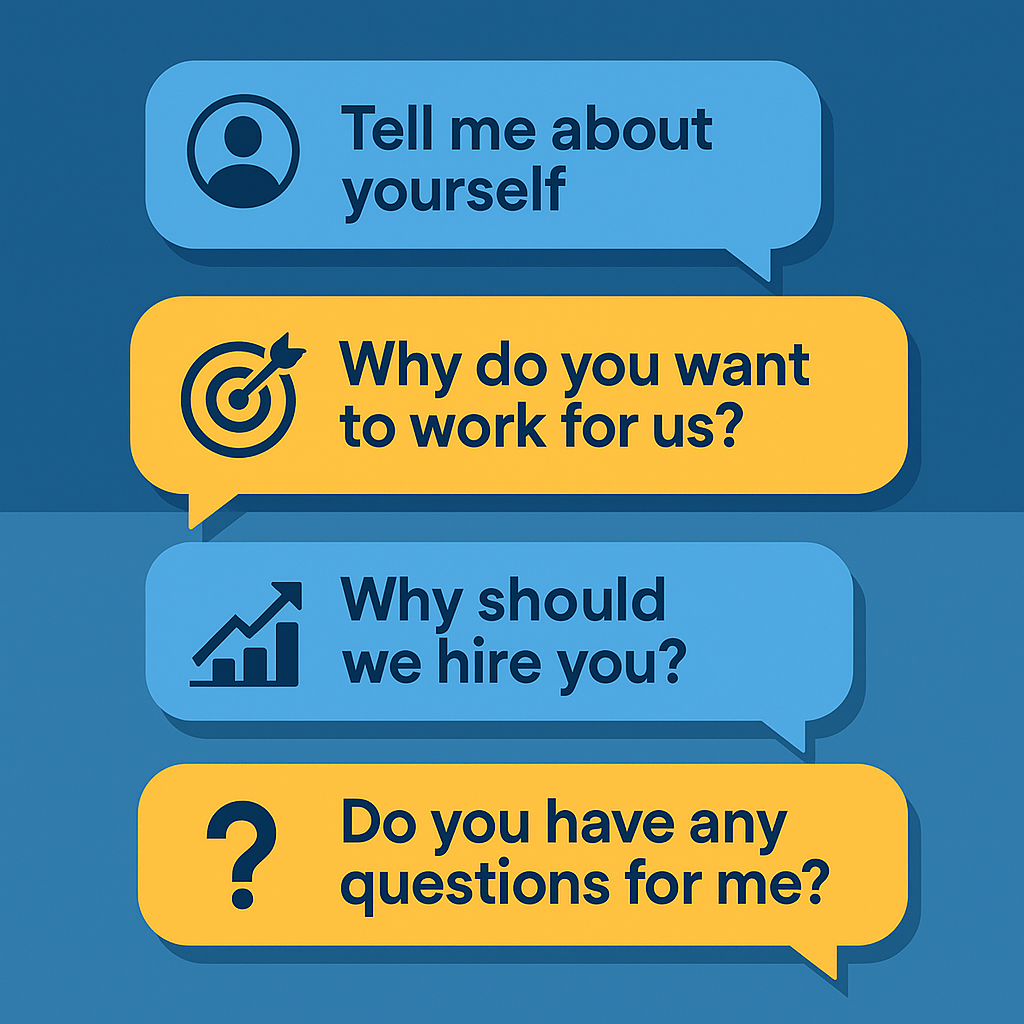
1. “Tell me about yourself.”
What I’m really asking:
- Have you done work relevant to the job you’re applying for?
- Do you understand your own strengths and story?
- Can you communicate crisply?
- What drives you, and does that energy help us grow?
This is a classic question, but the reason I use it is very intentional.
Most people answer with their life story: where they were born, where they studied, a long narration of events. I wait patiently — but I’m listening for something very specific:
Can they pick the right information for this moment?
A good candidate will connect their answer directly to the role — showing me they understand why they are here, what matters for this job, and how their experience lines up.
I’m not looking for perfection. I’m looking for self-awareness. When someone can speak about their work clearly — the problems they solved, the impact they had, what they learned — it tells me they’ve thought deeply about their journey.
I’m also listening for passion.
Passion doesn’t always mean high energy or big words. It means genuine interest — curiosity that’s alive. When someone talks about something they built, improved, or discovered with excitement, that is a signal of future excellence.
And lastly, I evaluate crispness. If you cannot summarize your own story with clarity, how will you communicate with customers, teammates, or stakeholders?
A strong answer is structured, intentional, and confident — without being boastful.
A weak answer is a long, unfiltered rewind of everything the person has ever done.
Your story should be sharp, not random. That alone tells me a lot.
2. “Why do you want to work for us?”
What I’m really asking:
- Have you done your research about the company?
- Do you understand the problems we solve and why they matter?
- Can you see yourself contributing to the mission?
- Are you curious about what we do?
This question helps me separate casual applicants from intentional ones.
Every company has a mission, a problem to solve, a reason for its existence. I want to know if the candidate has taken the time to understand who we are — and why it matters to them.
When someone says, “I want to work for you because I saw your job posting,” that’s not a real desire. That’s just convenience.
But when someone says,
“I explored your website, your tools, your philosophy. I believe in helping people build careers with confidence… and here’s how I think I can contribute,”
that’s someone who has already taken the first step toward being part of our mission.
I also watch for curiosity. Good candidates ask questions in the middle of their answer:
“What technology stack do you use?”
“How does the team collaborate?”
“What does success look like in the first 90 days?”
This shows me they’re thinking deeply — beyond salary and title.
Curiosity is not optional in a startup. We are building new things every day. The people who thrive here are the ones who are naturally inclined to understand, explore, and ask “why.”
If someone shows me this curiosity upfront, I know they’ll bring it into the job.
3. “Why should we hire you?”
What I’m really asking:
- Do you understand your own strengths?
- Can you articulate the value you bring?
- Are you confident without being arrogant?
- Can you sell yourself?
I use this question interchangeably with “Tell me about yourself,” depending on the candidate and conversation flow.
But this one reveals something different — self-belief.
We work in a world where roles evolve rapidly. People who cannot articulate their strengths often struggle to navigate ambiguity. Someone who knows what they bring to the table — and can explain it clearly — usually performs with more ownership.
This question forces the candidate to take a position:
“Here is what I do well, and here is how it helps you.”
It’s not about bragging. It’s about clarity.
When someone confidently says:
“I’m strong in X. I’ve done Y. And based on your current needs, I can help with Z,”
that tells me they are comfortable evaluating themselves realistically.
When someone says,
“I don’t know… whatever you need, I can do,”
that’s a red flag. Flexibility is good. A lack of identity is not.
In startups — especially — people need to know their superpowers. Not because we want egos, but because we want ownership.
This question reveals whether the person is ready to step into responsibility and believe they can create value.
4. “What are you most proud of?”
—or— “What was your proudest professional moment?”**
This is one of the most revealing questions I ask.
When someone shares their proudest moment, I get to see their internal compass:
- What they value
- What kind of work energizes them
- How they think about impact
- How they solve problems or challenge the status quo
- How they take initiative without being asked
I listen for two things:
1. Whether their passion aligns with our needs
If their proudest moment involves solving problems, improving processes, delivering customer value, or innovating — that’s a strong signal.
2. How they think about ownership
Do they take pride in impact, collaboration, innovation, or resilience?
This one question uncovers values, mindset, and potential far better than a resume.
5. “Do you have any questions for me?”
What I’m really asking:
- Are you curious?
- Do you have the courage to ask what matters?
- Are you serious about this job?
- Do you think about fit from your side too?
Most candidates say, “No, I’m good.”
To me, that usually means they aren’t thinking deeply.
A job is a major decision. If you don’t have any questions — not about the team, not about the role, not about performance expectations, not about growth opportunities — then you’re not evaluating your future seriously.
And I want people who treat their future seriously.
The best candidates ask questions like:
- “What challenges is the team currently facing?”
- “How will success be measured for this role?”
- “What does the next year look like for the company?”
- “How do you see this position evolving?”
- “Can you explain the work culture and expectations?”
- “What are the financial plans or stability of the company?”
They even ask simple but important things like work timings, flexibility, communication style, how decisions are made — things that matter to their daily life.
This tells me they have self-respect, clarity, and a desire to make an informed decision.
It also tells me they are fearless enough to ask for what they want.
People who ask the right questions early tend to communicate better later. They don’t sit silently with doubts. They seek clarity. They take ownership of their role. And they align faster.
When someone has thoughtful questions, it’s a strong signal of maturity.
What These 5 Questions Reveal Together
Individually, each question sounds basic.
Together, they reveal a complete picture:
✔ Skills and relevance
“Tell me about yourself” shows me if you’ve done the work that matters here.
✔ Motivation
“Why do you want to work for us?” tells me if you’re here for a job or a mission.
✔ Confidence and clarity
“Why should we hire you?” shows me if you understand your strengths and value.
✔ Values and Passion
“What are you most proud of?” reveals what you value, what energizes you, and how your passion connects to the kind of impact our company needs.
✔ Curiosity and maturity
“Do you have any questions for me?” tells me if you think like a long-term partner rather than just an applicant.
These four questions help me understand:
- how you think
- what you value
- how you communicate
- what drives you
- how you fit into the team
- and whether you will thrive here
They are simple — but extremely revealing.
And for candidates reading this:
If you reflect on these questions before your next interview, I promise you will perform better anywhere, not just at KudosWall.
What I Look For Beyond the Questions
Even though these are my core questions, I also observe:
How the candidate listens.
Do they interrupt? Do they wait thoughtfully? Do they respond intelligently?
How they talk about previous teams.
Do they show respect? Or do they blame?
How they react to ambiguity.
When I describe a growing startup environment, do they get excited or worried?
How they think about learning.
People who are always learning get ahead faster.
How honest they are.
I can forgive lack of knowledge — but not lack of honesty.
Hiring is more than checking boxes. It’s about understanding the human being in front of you — and whether your journeys align.
A Final Thought
Every interview is a conversation between two futures: yours and theirs.
I don’t just hire for skills — I hire for mindset, clarity, passion, and curiosity.
These four questions help me find people who will not just do the job, but also grow with us.
And if you’re preparing for your next interview — reflect on your story, your strengths, your “why,” and your questions. You’ll walk in with confidence, and you’ll stand out more than you think.
About the Author
Jagannadha “Jag” Vootkur is the Founder & CEO of KudosWall, an AI-powered Career Builder platform with 600,000+ resumes created, offering tools like an ATS Resume Checker, AI Resume Builder, Interview Preparation Copilot, and more.
He also leads HaiTalent, an AI recruiting software helping companies hire smarter with contextual AI screening and India’s growing resume database.
Jag writes regularly about hiring, personal growth, and building human-centered AI. Connect with him on LinkedIn or explore KudosWall at kudoswall.ai.
Leave a Reply