Disclosure: This page may contain affiliate links. We may earn a small commission at no extra cost to you. Learn more.

Last updated: October 2025
Introduction
Language proficiency is a crucial component of a Europass CV, particularly for professionals seeking jobs in multilingual environments. Employers often prioritize candidates with strong language skills, especially in sectors that require international communication.
This article explains why language proficiency is important, how to correctly list language skills, and common mistakes to avoid.
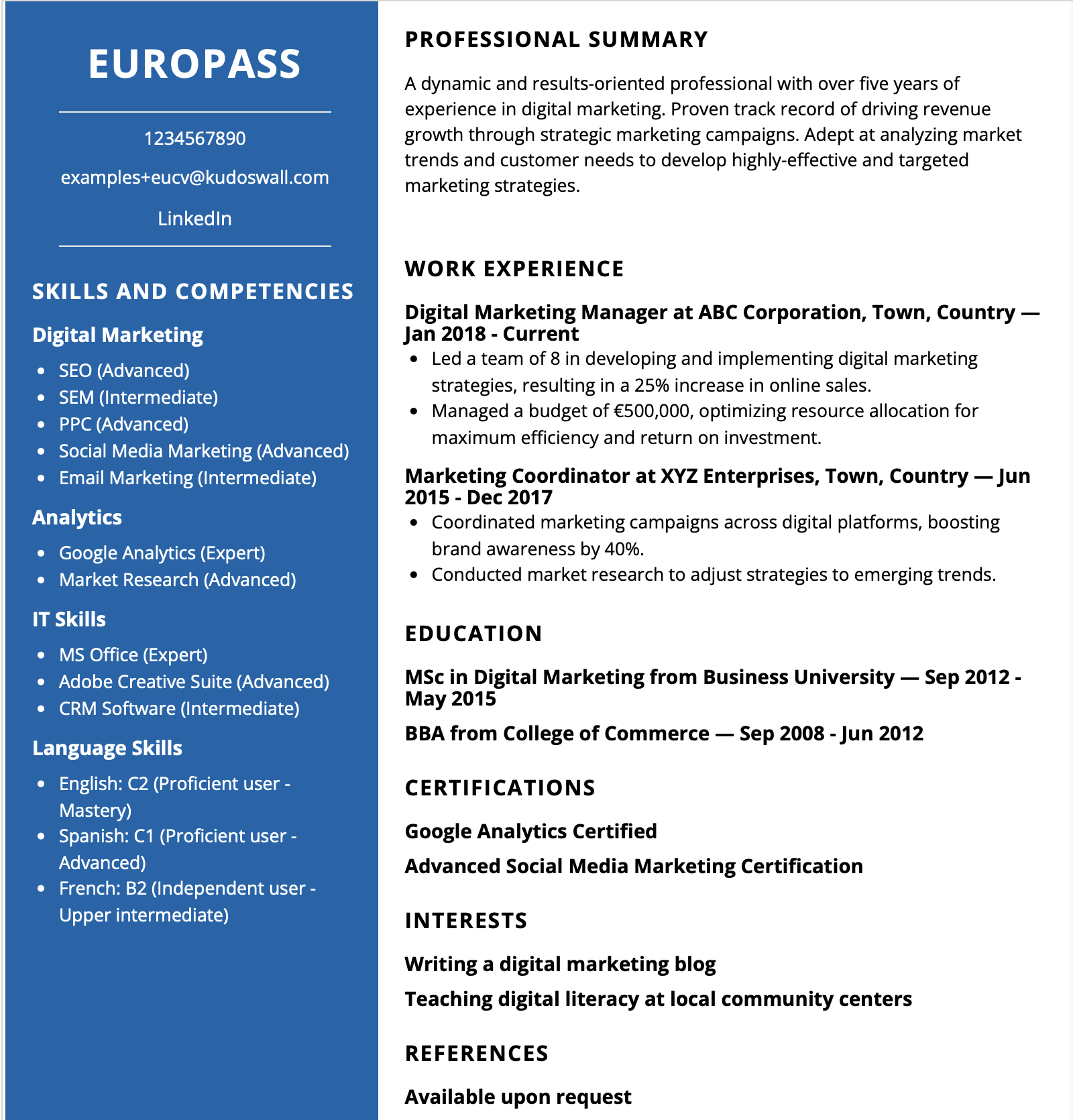
Need an example of a CV that recruiters in Europe actually notice? Explore our curated collection of professional CV examples, designed to help you land your next opportunity faster.
Why Language Proficiency Matters on a Europass CV
European employers place significant importance on language skills for several reasons:
- Many job postings specify multiple language requirements, particularly in customer service, tourism, and finance.
- Language proficiency reflects adaptability and an ability to work in international environments.
- Some positions, especially those in the European Union institutions, require fluency in at least two official languages.
For example, jobs in Belgium frequently require proficiency in French, Dutch, and English due to the country’s multilingual landscape.
How to Properly List Language Proficiency in a Europass CV
The Common European Framework of Reference for Languages (CEFR) provides a standardized way to classify language proficiency. Europass CVs follow this framework:
| CEFR Level | Proficiency Description |
|---|---|
| A1 | Beginner |
| A2 | Elementary |
| B1 | Intermediate |
| B2 | Upper-Intermediate |
| C1 | Advanced |
| C2 | Proficient |
💡 Tip: Want to know how recruiters view your resume? Check your resume’s ATS Score with the Free ATS CV Checker.
Example of correct formatting in a Europass CV:
- English – C1 (Advanced)
- French – B2 (Upper-Intermediate)
- German – A2 (Elementary)
Employers value candidates who provide clear details regarding their language capabilities.

Industries Where Language Proficiency is Most Important
Certain industries prioritize multilingual candidates, including:
- Hospitality & Tourism: Hotels, airlines, and travel agencies require employees to interact with international clients.
- Banking & Finance: Many European financial institutions serve clients across multiple countries.
- Technology & IT: European tech hubs, such as Berlin and Stockholm, attract global talent and require multilingual communication.
Many German companies look for candidates who can speak both English and German well to handle business operations effectively. Improve your English and language skills to meet the required level.
To create a well-structured Europass CV with properly listed language skills, KudosWall’s AI Resume Builder offers user-friendly templates.
Common Mistakes to Avoid When Listing Language Proficiency
- Overestimating proficiency – Many employers conduct language assessments during interviews.
- Failing to update language levels – If language skills improve due to work experience or courses, they should be updated accordingly.
- Not including certifications – Official certifications, such as TOEFL, DELF, or Goethe-Institut exams, strengthen credibility.
For those preparing for interviews in a foreign language, KudosWall’s AI Interview Copilot provides mock interview practice tailored to various industries.
Conclusion
Language skills are a valuable asset on a Europass CV and should be clearly documented.
To create an optimized Europass CV, use the official Europass CV builder or try KudosWall’s AI Europass Resume Builder for a professional and ATS-friendly format.
For job seekers preparing for multilingual interviews, KudosWall’s AI Interview Preparation tool offers free mock interview practice to boost confidence and performance.
Frequently Asked Questions
1. What are CEFR levels in a Europass CV?
CEFR levels (A1 to C2) describe your proficiency in reading, writing, listening, and speaking. Listing these on your Europass CV ensures recruiters can quickly understand your communication skills across languages.
2. How do I list my language skills correctly in a Europass CV?
Use the CEFR framework and format each entry clearly, such as “English – C1 (Advanced)” or “French – B2 (Upper-Intermediate)”. This makes your Europass CV consistent with European standards.
3. Do I need official certifications for my language skills?
It’s recommended. Certificates like IELTS, TOEFL, DELF, or Goethe-Zertifikat strengthen your credibility and prove that your self-assessment matches official standards.
4. Can I create a Europass CV with language skills easily?
Yes. You can use the AI Europass CV Builder to structure your Europass CV and include CEFR language levels in an ATS-friendly format.
5. How often should I update my Europass CV language skills?
Review your CEFR levels regularly. If you’ve taken new courses, gained work experience abroad, or achieved a new certification, update your Europass CV to reflect your latest proficiency.
6. Where can I find Europass CV examples?
You can explore free, ready-made Europass CV examples created by experts at KudosWall. Each sample follows the official Europass format and shows how to present education, skills, and CEFR language levels effectively.
Leave a Reply