Disclosure: This page may contain affiliate links. We may earn a small commission at no extra cost to you. Learn more.

Table of Contents
- TL;DR
- Introduction
- The Rise of AI-Driven Hiring
- How Resume Writing Evolved in the ATS Era
- Remote & Hybrid Work: The New Normal Stabilizes
- Skills That Dominated the 2025 Job Market
- Professions That Flourished in 2025
- Professions That Suffered Due to AI
- Layoffs, Rehiring & Market Volatility
- Freshers & Early Career Trends
- Freelancing & Contract Work Boom
- Salary & Compensation Trends
- Job Search Behavior in 2025
- Employer Branding & Culture Shifts
- Predictions for 2026
- Conclusion
TL;DR
2025 was a year of massive transformation in the job industry. AI reshaped hiring, automated screening became the norm, and new skills dominated the market. Some professions flourished, while others faced displacement. Remote work stabilized. Freelancing grew. Resume writing evolved drastically due to ATS adoption. And as 2026 begins, adaptability, AI literacy, and continuous learning have become essential for every professional.
1. Introduction
If you were job hunting or hiring in 2025, you already know how different the landscape felt. The year pushed organizations toward smarter systems, efficient hiring, and AI-driven decision-making. It was a year of rapid adaptation. A year of learning. A year when both job seekers and employers had to evolve.
Let’s look back at the biggest shifts that shaped the global workforce.
2. The Rise of AI-Driven Hiring
AI hiring tools became mainstream in 2025. Companies used AI not just for screening resumes but for evaluating job fit, predicting candidate success, and ranking applications.
The hiring pipeline changed significantly:
- ATS systems became smarter.
- Job fit checkers emerged as essential tools.
- Recruiters relied on AI for first-level screening.
- Many hiring decisions became data-driven rather than intuition-driven.
For job seekers, this meant one thing: their resumes had to be optimized for machines before reaching humans.
This shift pushed resume builders, AI-based writing assistants, and ATS score checkers into the spotlight. Job seekers no longer competed with people first—they competed with algorithms.
3. How Resume Writing Evolved
Resume writing in 2025 was nothing like it was five years ago. The old method of writing a resume—typing on a Word document and exporting to PDF—became outdated.
Here’s how resume writing evolved:
a. ATS-Friendly Formatting Became Mandatory
Design-heavy resumes were no longer effective. ATS systems struggled with graphics, icons, columns, and fancy templates.
Clean, minimal, structured resumes became the standard.
b. Keyword Optimization Became the Norm
Every job seeker now matched their resume to the job description.
AI tools highlighted missing skills, required keywords, and role-specific terms.
c. AI Cover Letters and Summaries Emerged
Freshers and experienced professionals relied on AI to frame:
- Professional summaries
- Cover letters
- Bullet points
- Action verbs
It saved time and ensured relevance.
d. Resume Analytics Became a Game Changer
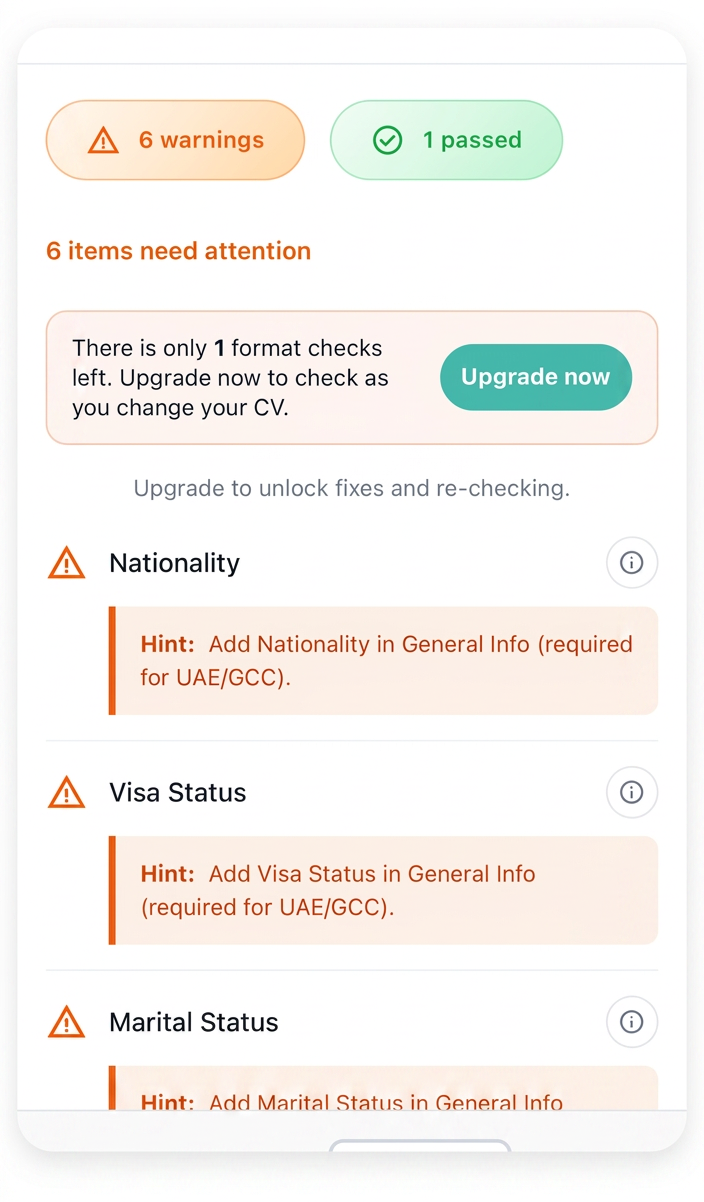
ATS resume checkers gave insights like:
- ATS compatibility score
- Job match percentage
- Skill gap analysis
- Readability score
These results helped job seekers refine their documents like never before.
e. Standardized Formats Rose in Popularity
Formats like Europass CV for Europe and even India-based ATS templates became widely used.
Resume writing turned into a strategic process—less guesswork, more precision.
4. Remote & Hybrid Work Stabilizes
By 2025, remote and hybrid work weren’t trends—they were stable parts of workplace culture.
Companies finally found a balance:
- 3-day hybrid weeks became common.
- Fully remote roles continued in tech, design, writing, and customer support.
- Meetings became shorter and more asynchronous.
- Remote-first cultures matured with better collaboration tools.
Employees loved the flexibility.
Companies loved the efficiency.
5. Skills That Dominated the 2025 Job Market
The most in-demand skills of the year reflected one clear message:
AI is no longer optional.
Top technical skills
- AI literacy
- SQL and data analysis
- Cloud computing (AWS, Azure)
- Cybersecurity
- Automation and scripting
- Low-code development
- UX/UI knowledge
- Prompt engineering
Top soft skills
- Communication
- Problem-solving
- Storytelling
- Adaptability
- Cross-functional collaboration
Employers wanted people who could work with machines and with teams.
6. Professions That Flourished in 2025
Certain industries saw extraordinary growth.
1. AI & Automation
- Machine learning engineers
- AI trainers
- Data scientists
- MLOps engineers
- Prompt engineers
2. Cybersecurity
Threat levels increased, so demand skyrocketed.
3. Healthcare & MedTech
Telemedicine, biotech, and patient data systems expanded.
4. Green Energy & EV Sector
Solar, EV charging networks, and sustainability tech boomed.
5. FinTech & InsurTech
Digital claims, fraud detection, and automated underwriting saw rapid growth.
6. Logistics & Supply Chain Tech
Automation tools improved tracking, forecasting, and warehouse operations.
These industries not only hired aggressively but also paid premium salaries.
7. Professions That Suffered Due to AI
AI reshaped industries, but not always positively.
Roles Most Impacted
- Data entry operators
Highly automatable with AI OCR tools. - Tier 1 customer support
Chatbots replaced basic queries. - Administrative assistants
Scheduling and documentation became automated. - Telemarketing roles
AI-based lead qualification took over. - Generic content writers
AI writing tools handled basic content creation. - Junior graphic designers
AI design tools reduced repetitive design workloads.
While some professionals upskilled successfully, others struggled to transition into new roles.
8. Layoffs, Rehiring & Market Volatility
2025 saw waves of layoffs, especially in tech, due to automation and restructuring.
However, rehiring trends soon followed in new domains.
Layoff-Prone Areas
- Overstaffed tech teams
- Redundant operational roles
- Content-heavy teams replaced by AI
Rehiring Surges
- Roles requiring human judgment
- Complex decision-making jobs
- Cross-functional leadership roles
- AI oversight and model evaluation positions
The job market became more dynamic than ever.
Major Tech Giants and the Layoff Wave of 2025
One of the most defining moments of 2025 was the series of layoffs announced by global giants like Google, Meta, Amazon, Microsoft, Salesforce, and several other household names. These announcements shook the job market and created a ripple effect across industries.
Why Did Big Tech Lay Off Employees?
The reasons were not simply financial pressure. It was a deeper shift in how these companies operated:
1. Automation Replaced Repetitive Roles
AI and automation tools improved significantly in 2025. Tasks once handled by large operations teams were suddenly automated.
Data clean-up, support workflows, content moderation, and internal admin processes became AI-driven.
2. Over-Hiring During Previous Years
Many of these companies hired aggressively during the pandemic years to manage growth.
Once demand normalized, they found themselves with workforce redundancies.
3. Cost Optimization and Efficiency
Shareholders demanded profitability.
Big tech companies focused on leaner teams, faster execution, and more efficient systems.
4. Shifting Priorities Toward AI Research and Innovation
Funds and manpower were reallocated to AI labs, research teams, and automation projects.
Who Was Affected the Most?
Layoffs didn’t target only entry-level staff. Across the board, impacted roles included:
- Mid-level managers
- Support operations teams
- HR coordinators and admin staff
- Marketing teams
- UX research roles
- Junior engineers in saturated niches
- Content teams replaced by AI workflows
Interestingly, many of these roles were once considered safe in large companies.
How Did It Impact the Global Workforce?
a. Job Seekers Became More Cautious
People started applying strategically instead of mass-applying.
They sought stability, meaningful work, and better alignment with skills.
b. Talent Moved to Startups and Mid-Size Companies
Laid-off employees brought expertise to smaller firms, driving innovation.
c. The Rise of Continuous Upskilling
Professionals across all levels recognized the need to stay relevant.
AI literacy, data fluency, product thinking, and cross-functional skills became essential.
d. Contract Work and Freelancing Saw a Boost
Many professionals shifted to consulting or freelance roles temporarily or permanently.
The Silver Lining
Though layoffs were tough, they also marked a transition in how workforces were structured.
Companies became more intentional with hiring. Many organizations are also turning to outsourcing HR functions to streamline recruitment, payroll, compliance, and workforce administration while adapting to rapidly changing hiring needs.
Employees grew more adaptive.
Innovation accelerated.
And talent became more distributed globally.
The 2025 tech layoff wave changed how professionals think about stability, skills, and long-term growth. It pushed the world toward a more resilient, flexible, and future-ready workforce.
9. Freshers & Early Career Trends
2025 was a transformative year for freshers.
Key shifts
- Internships became the most reliable path to full-time roles.
- Portfolio-based hiring increased for creative and tech roles.
- Micro-certifications replaced long courses.
- AI familiarity became a baseline expectation.
- Soft skills became equally important as hard skills.
Gen Z embraced flexible learning and multi-care
10. Freelancing & Contract Work Boom
Freelancing exploded in 2025 across various sectors.
Why freelancing grew
- Global remote hiring opened new opportunities.
- Companies preferred flexible talent pools.
- Individuals wanted work-life autonomy.
- AI tools made freelancing more efficient.
Designers, developers, marketers, writers, analysts, and virtual assistants thrived in freelance ecosystems.
11. Salary & Compensation Trends
Organizations redesigned their compensation strategies.
Key patterns
- Transparent salary bands became common.
- AI-skilled professionals earned significantly more.
- Mid-level managers saw stagnant growth due to automation.
- Performance-linked and project-based incentives increased.
Employees prioritized flexibility and meaningful work over traditional perks.
12. Job Search Behavior in 2025
Job seekers became more strategic and data-driven.
Key behaviors
- Applying to fewer but more targeted roles.
- Using ATS resume checkers before any application.
- Leveraging job-fit scoring to evaluate roles.
- Creating tailored resumes rather than a single universal one.
- Using video introductions and project portfolios.
The job search became more intentional than ever.
13. Employer Branding & Culture Shifts
Companies knew they needed strong employer branding to retain talent.
Key shifts
- Mental health support became standard.
- Organizations adopted ethical AI policies.
- DEI initiatives matured into long-term strategies.
- Internal mobility programs expanded.
- Culture-fit became collaboration-fit.
Employees cared about purpose, growth, and inclusion.
14. Predictions for 2026
2026 is shaping up to be even more transformative.
What to expect
- AI skills will become mandatory in nearly all white-collar jobs.
- Hiring will become fully automated, with humans involved only at later stages.
- Freelancing will continue to grow as a full-time alternative.
- Job seekers will rely heavily on ATS tools and AI resume optimization.
- Continuous upskilling will become non-negotiable.
- More roles will require hybrid skill combinations—tech + business, data + creativity.
The professionals who thrive will be the ones who adapt quickly.
15. Conclusion
2025 was a defining year for the job industry. AI accelerated everything—from hiring and upskilling to role evolution and daily workflows. Some professions thrived. Others struggled. Resume writing evolved. Remote work stabilized. And job seekers became more strategic than ever.
As we enter 2026, one truth stands out:
Adaptability is the new currency.
Those who learn, evolve, and embrace technology will continue to grow in the future job market.

Leave a Reply