Disclosure: This page may contain affiliate links. We may earn a small commission at no extra cost to you. Learn more.

Table of Contents
- TL;DR
- Introduction: The New Pulse of Modern Medicine
- The Rise of AI in Healthcare
- AI Tools in Healthcare and Who Uses Them
- How AI in Healthcare Is Redefining Medical Professionals
- Challenges and Ethics of AI in Healthcare
- The Future of AI in Healthcare Careers
- Why Healthcare Resume Examples Matter in the AI Era
- Conclusion: A Future Where Tech and Care Coexist
- FAQs
TL;DR
AI in healthcare is transforming diagnosis, treatment, and career paths for professionals. From predictive tools and robotic surgeries to smart data platforms, AI empowers doctors, nurses, and researchers to work faster and smarter. Learn about top AI tools, the changing job landscape, and how using healthcare resume examples can help you stay competitive in this evolving digital era.
| Tool/Platform | Primary Function | Who Uses It | Key Features |
|---|---|---|---|
| IBM Watson Health | Data analytics and clinical decision support | Doctors, hospital administrators | AI-powered diagnostics, predictive analytics, patient data management |
| Google DeepMind Health | Predictive healthcare analytics | Radiologists, ophthalmologists | Early disease detection, medical imaging analysis |
| PathAI | AI-based pathology analysis | Pathologists, lab technicians | Improved accuracy in detecting cancer and rare diseases |
| Tempus | Precision medicine and genomic data analysis | Oncologists, geneticists | AI-driven cancer treatment personalization |
| Butterfly Network (Butterfly iQ) | Portable ultrasound imaging | Nurses, emergency care professionals | AI-enhanced imaging and diagnosis via handheld device |
| Zebra Medical Vision | Medical imaging and scan interpretation | Radiologists | AI algorithms detect abnormalities from X-rays, CTs, MRIs |
| Olive AI | Workflow automation and revenue management | Healthcare administrators, billing teams | Reduces administrative burden, speeds up patient data entry |
| Aidoc | Radiology image analysis | Radiologists, ER doctors | Detects critical findings in CT scans using real-time AI |
| BioXcel Therapeutics | AI-driven drug development | Pharmaceutical researchers | Accelerates drug discovery using AI for molecule mapping |
| Nuance DAX (Dragon Ambient eXperience) | Clinical documentation and transcription | Doctors, nurses | Automates note-taking and improves electronic health records (EHRs) |
| Babylon Health | Virtual consultations and AI-based triage | General practitioners, telemedicine specialists | Symptom checker, chatbots, remote diagnostics |
| Arterys | Cloud-based medical imaging | Cardiologists, radiologists | Real-time AI-assisted image visualization and analysis |
Introduction: The New Pulse of Modern Medicine
AI in healthcare isn’t just a buzzword anymore—it’s the new heartbeat of the medical world.
Hospitals, clinics, and research institutions are increasingly turning to artificial intelligence to enhance accuracy, reduce costs, and improve patient care.
From AI-driven imaging tools to predictive analytics for early diagnosis, AI in healthcare is reshaping how professionals work. For millennials and Gen Z healthcare workers, this is both exciting and challenging. The way you learn, work, and even build your career (think: using updated healthcare resume examples) is evolving rapidly.
The Rise of AI in Healthcare
Artificial Intelligence made its way into healthcare quietly, starting with data analysis and clinical trials. But today, it’s everywhere—from diagnostics and patient engagement to hospital management.
AI in healthcare means machines can now learn patterns from data, helping doctors predict diseases before symptoms even appear. Tools like IBM Watson Health and Google DeepMind are changing how medical data is analyzed, helping clinicians make data-backed decisions faster.
For instance, DeepMind’s AlphaFold solved one of biology’s biggest mysteries—predicting protein structures—accelerating drug discovery. These are not future dreams anymore; they’re happening right now.
AI Tools in Healthcare and Who Uses Them
Let’s look at how AI in healthcare is applied through tools that different professionals use daily:
1. PathAI & Aidoc — For Radiologists and Pathologists
These AI tools scan medical images to detect diseases like cancer or stroke faster and more accurately than manual processes. Radiologists use Aidoc to identify anomalies in scans, while PathAI helps pathologists improve diagnostic precision.
Result: Faster reports, fewer errors, and better patient outcomes.
2. BioXcel & Insilico Medicine — For Pharmacologists and Researchers
These platforms use AI to predict how compounds will behave in the human body, cutting drug discovery time by half.
Result: Researchers can test more compounds virtually before running expensive lab experiments.
3. Nuance Dragon Medical One — For Doctors and Administrators
This AI voice tool converts doctors’ speech into structured notes instantly.
Result: Less time on paperwork, more time for patients.
4. Olive AI — For Healthcare Operations Teams
Olive AI automates hospital workflows like patient billing, insurance verification, and scheduling.
Result: Administrative staff focus on problem-solving, not data entry.
5. Babylon Health & Ada Health — For General Practitioners and Nurses
These AI-powered apps assist in preliminary patient screening and symptom checking.
Result: Nurses and GPs can triage patients efficiently, reducing waiting times.
6. Fitbit Health AI & Apple HealthKit — For Wellness Coaches and Chronic Care Specialists
AI monitors patients’ vitals, sleep, and activity, giving real-time insights.
Result: Preventive care is now proactive, not reactive.
Each of these AI in healthcare tools supports professionals to focus on empathy and strategy rather than repetitive tasks.
How AI in Healthcare Is Redefining Medical Professionals
AI isn’t replacing healthcare professionals—it’s retraining them.
Millennials and Gen Z clinicians are embracing hybrid roles like “AI-assisted diagnostician” or “clinical data analyst.”
Doctors are learning to interpret AI outputs rather than just prescribe. Nurses are using predictive analytics to anticipate emergencies. Researchers are becoming experts in medical data science.
This evolution means your resume must reflect digital fluency. Reviewing healthcare resume examples that include AI-related skills can give you an edge—highlighting your readiness for modern healthcare systems.
Challenges and Ethics of AI in Healthcare
Like any innovation, AI in healthcare has its share of challenges.
- Data Privacy: Medical data is sensitive, and AI systems must protect patient confidentiality.
- Algorithm Bias: AI trained on limited data can misdiagnose certain populations.
- Skill Gaps: Professionals must keep up with new technologies to remain relevant.
- Human Touch: Balancing automation with empathy is key—AI can’t replace compassion.
Healthcare leaders are now prioritizing AI ethics, ensuring transparency, fairness, and trust in every application.
The Future of AI in Healthcare Careers
The future looks promising—and fast.
AI in healthcare will enable predictive and preventive medicine, where diseases are caught early through smart wearables and continuous monitoring. Surgeons will use AI-guided robotics for microsurgeries, and pharmacists will rely on AI simulations to design personalized drugs.
For professionals, this means new job titles like:
- AI Medical Data Analyst
- Clinical Algorithm Specialist
- AI Healthcare Strategist
If you’re looking to future-proof your career, start with learning how AI integrates into your field. Explore new roles, gain certifications, and use healthcare resume examples that highlight your adaptability and technical skills.
Ultrasound Technician Resume Example

Medical Laboratory Technician Resume Example

Why Healthcare Resume Examples Matter in the AI Era
The rise of AI in healthcare has also changed how resumes are written and read. Recruiters now rely on ATS (Applicant Tracking Systems) to screen candidates.
Your resume needs to be AI-optimized — using the right keywords, clean formatting, and action verbs that resonate with both humans and machines.
Modern healthcare resume examples show professionals including AI competencies such as:
- Using diagnostic AI tools
- Implementing EHR automation
- Data-driven decision-making
- AI ethics and governance awareness
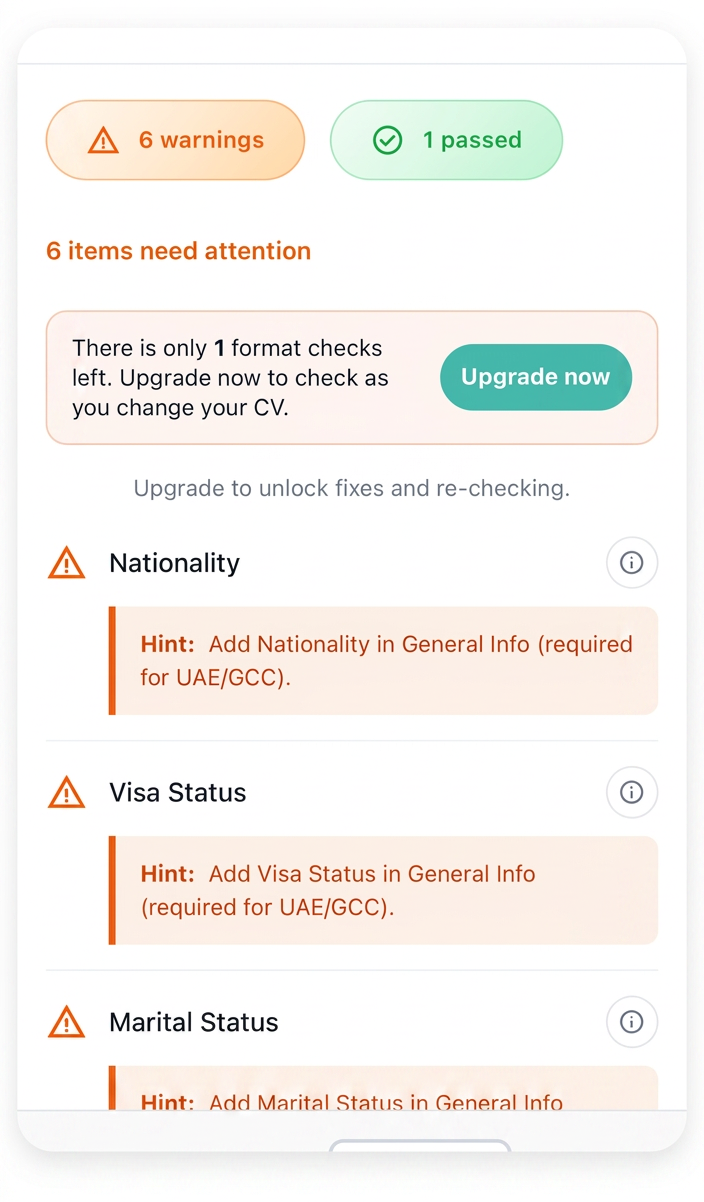
Use an ATS resume checker to evaluate your resume’s score before applying. It ensures your application isn’t lost in the AI shuffle.
Conclusion: A Future Where Tech and Care Coexist
AI in healthcare isn’t just about efficiency — it’s about empowering professionals.
From diagnosis to drug discovery, AI is transforming the landscape, making healthcare more predictive, personalized, and accessible.
Millennials and Gen Z professionals stand at the frontier of this revolution. Embrace technology, keep learning, and ensure your resume reflects your adaptability. Use reliable healthcare resume examples to highlight your AI skills and show employers you’re ready for the next era of medicine.
FAQs
1. What is AI in healthcare?
AI in healthcare refers to the use of artificial intelligence tools to improve diagnosis, treatment, patient care, and administration.
2. How does AI help doctors?
AI supports doctors in analyzing scans, predicting diseases, and managing patient data efficiently, allowing them to focus more on patient care.
3. Are AI tools replacing healthcare jobs?
No. They’re augmenting them. AI handles repetitive tasks, while humans focus on empathy and decision-making.
4. Which AI tools are most used in hospitals?
PathAI, Aidoc, IBM Watson Health, and Olive AI are commonly used for diagnostics, administration, and predictive analysis.
5. What new jobs are emerging in healthcare due to AI?
Roles like AI medical analyst, clinical data interpreter, and healthcare AI strategist are becoming popular.
6. Why should I check healthcare resume examples before applying?
They help you understand how to frame your skills, especially AI-related ones, to pass ATS filters and attract recruiters.
7. How can I make my healthcare resume AI-friendly?
Use clean formatting, relevant keywords, and check it using an ATS resume checker to improve your visibility.

Leave a Reply