Disclosure: This page may contain affiliate links. We may earn a small commission at no extra cost to you. Learn more.

In the world of job hunting, your resume is your Minimum Viable Product (MVP)—the essential, streamlined tool that markets your professional value. Regardless of your experience level—entry-level, mid-career, or executive—understanding the basic resume format is critical to making a strong impression.
This blog explores the three primary resume formats, outlines the key sections every resume must include, and explains how to adapt resumes for different experience levels. It also highlights the subtle but significant differences in expectations between India and the USA.
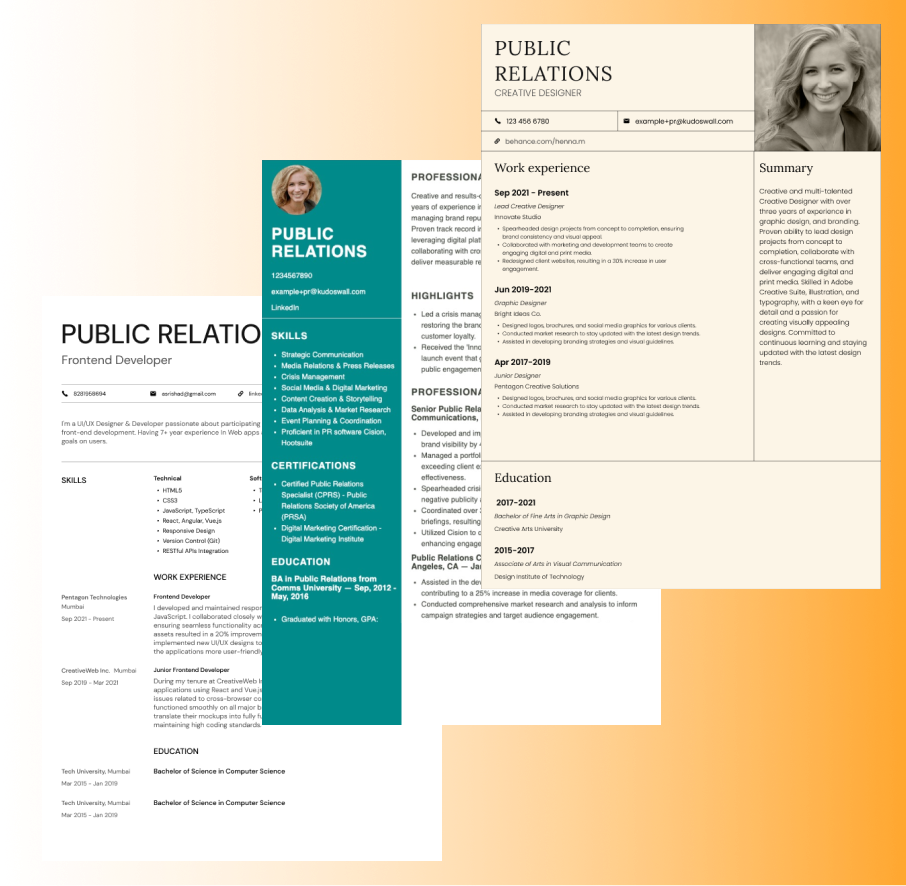
What Are the 3 Types of Resume Formats?
A basic resume format typically falls into one of three categories, each tailored to a different type of candidate:
- Chronological Resume
This format organizes work history in reverse chronological order, making it ideal for professionals with consistent career trajectories.
For example, a Senior Software Engineer might structure their experience like this:
- Led a team of 10 developers to deliver a $2M project, achieving a 30% increase in deployment efficiency.
- Improved system uptime by implementing automation strategies.
- Functional Resume
Focused on skills rather than work history, this format is perfect for fresh graduates or career changers.
For instance, a graduate in data analytics might highlight:
- Proficiency in Python, R, and SQL.
- Expertise in visualizing insights using Tableau and Power BI.
- Combination Resume
A hybrid format, combining the best elements of chronological and functional resumes, works well for experienced professionals. An experienced project manager could showcase:
- Leadership: Successfully managed cross-functional teams across regions.
- Results: Designed project workflows that reduced completion time by 20%.

The Basic Resume Format: Key Sections
Every resume—regardless of format—should include the following essential sections:
- Contact Information
Include your full name, email address, phone number, LinkedIn profile, and optionally, a personal website or portfolio link.
Example:
John Doe
Email: [email protected] | Phone: +1-123-456-7890 | LinkedIn: linkedin.com/in/johndoe | Portfolio: www.johndoedesign.com - Professional Summary
A short, impactful statement that highlights your career achievements and aspirations.
Example:
Data Analyst with 3+ years of experience in financial modeling and delivering actionable insights. Proficient in predictive analytics to drive business decisions. - Skills
List hard and soft skills relevant to the job, categorized for clarity.
Example:
Technical Skills: Tableau, SQL, Advanced Excel
Soft Skills: Leadership, Collaboration, Problem Solving
- Work Experience
Highlight your career milestones with quantifiable achievements.
Example:
Digital Marketing Manager at AdCorp (2018–2021):
Increased organic traffic by 60% through SEO and content strategies.
Managed a $500K budget, achieving a 25% increase in ROI.
- Education
Include your academic background, certifications, and notable coursework.
Example:
Master of Business Administration (MBA), University of California, Berkeley (2016–2018)
- Additional Sections
Optional sections such as projects, volunteer work, or awards add depth to your profile.
Example:
Volunteer Mentor at Code for Good (2020):
Mentored over 50 students in web development basics, resulting in successful project completions.
Customizing Resume Formats for Different Experience Levels
Entry-Level Professionals
Fresh graduates and newcomers to the workforce should focus on education, skills, and projects to compensate for limited work experience.
Example for Entry-Level Resume:
Professional Summary:
Recent graduate in Computer Science with strong programming and problem-solving skills. Seeking to apply technical expertise in software development.
Key Features:
- Academic projects such as creating a library management system in Java.
- Certifications in Python and data analytics.
Build your resume for free with our Free Resume Generator.
Mid-Level Professionals
Candidates with 3–10 years of experience should prioritize measurable accomplishments and career growth.
Example for Mid-Level Resume:
Professional Summary:
Project Manager with 5+ years of experience delivering IT projects on time and within budget. Adept at Agile methodologies and team leadership.
Key Features:
- Successfully delivered 15+ projects ranging from $100K to $2M.
- Improved project delivery times by 20% through process optimization.
Highlight your achievements professionally with our AI Resume Builder.
Experienced Professionals and Executives
Senior professionals should focus on leadership, strategic vision, and impactful results.
Example for Executive Resume:
Professional Summary:
Senior Executive with over 15 years of experience driving revenue growth and operational excellence. Proven track record in managing global teams and budgets exceeding $100M.
Key Features:
- Spearheaded a digital transformation project, reducing costs by 25%.
- Achieved 20% year-over-year revenue growth through strategic market expansion.
Create a standout executive resume with our Artificial Intelligence Resume Builder.
Regional Adaptations: India vs. USA
India
- Employers often expect resumes to include personal details like marital status or nationality, though this is becoming less common.
- A declaration or signature at the end of the resume may still be necessary for certain industries or government jobs.
- Multi-page resumes (2–3 pages) are more widely accepted.
USA
- Resumes are typically one page, with strict attention to brevity and relevance.
- Personal details like age, marital status, or nationality are excluded due to anti-discrimination laws.
- Resumes must be optimized for ATS (Applicant Tracking Systems) to increase chances of passing initial screenings.
More Resources
- The Best Resume Format and Templates for IT Professionals
- Top Resume Format Mistakes Freshers Make (& How to Fix Them)
- 6 Career Situations That Warrant a Cover Letter Alongside a Strong Resume
Final Thoughts
The Minimum Viable Product (MVP) of a resume lies in its ability to communicate your professional value efficiently and effectively. Whether you’re just starting out or aiming for the C-suite, a well-crafted resume tailored to your experience level and regional expectations can make all the difference.
Start building your professional future today at KudosWall.
What is the ideal resume length for different experience levels?
For entry-level candidates: 1 page.
For mid-level professionals: 1–2 pages.
For executives: 2–3 pages highlighting leadership and strategic achievements.
How many skills should be listed on a resume?
Include 6–10 relevant skills. Fewer than 5 may appear insufficient, while more than 12 can seem unfocused.
How much impact do quantifiable achievements add to a resume?
Resumes with measurable results (e.g., “increased traffic by 60%”) are 40% more likely to grab recruiter attention than resumes with vague descriptions.
How long do recruiters typically spend reviewing a resume?
On average, recruiters spend 6–8 seconds scanning each resume, which makes concise formatting and clear achievements crucial.
What percentage of resumes are filtered out by ATS before reaching recruiters?
Studies show up to 75% of resumes never make it past ATS screening due to poor formatting or missing keywords.

Leave a Reply